
Why Electrical Contractors Struggle With Jobsite Documentation
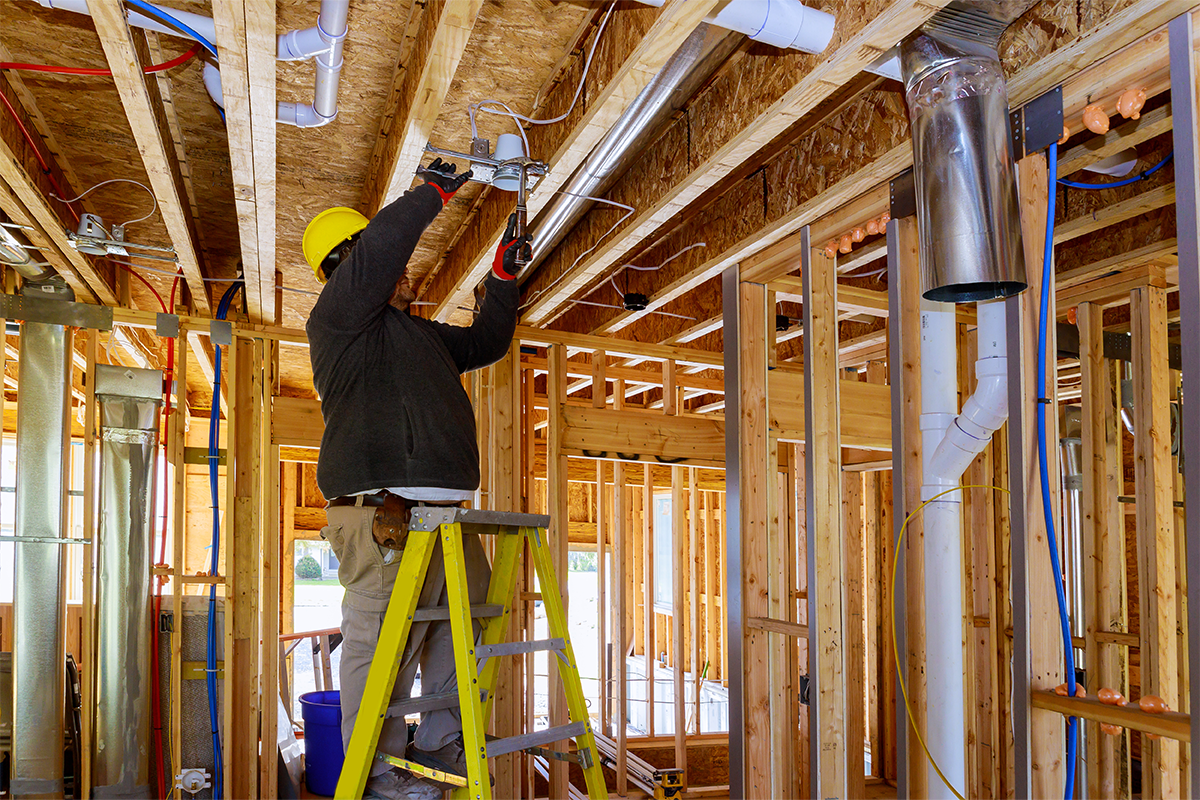
Electrical contractors do some of the most important work on a construction project, but much of that work disappears behind walls, ceilings, slabs, trenches, panels, and finished surfaces.
That creates a real problem.
If the work is not documented clearly before it is covered, it can become difficult to prove what was done, where it was done, when it was completed, and whether it was ready for inspection.
For many electrical contractors, the issue is not that nobody is taking photos. In fact, many teams are taking photos every day. The bigger problem is that the photos are scattered, hard to organize, and disconnected from useful field updates.
One electrician I spoke with described the frustration clearly: the team is already stressed because someone has to stop and take photos. Then, after the photos are taken, someone else has to organize them. Another electrician told me that even though he regularly documents his work, his boss still calls asking whether the job is done because the tool they already use does not make the update clear or easy to find.
That is the real documentation problem.
It is not just about capturing information.
It is about making the information useful.
1. Work Gets Covered Before It Is Documented
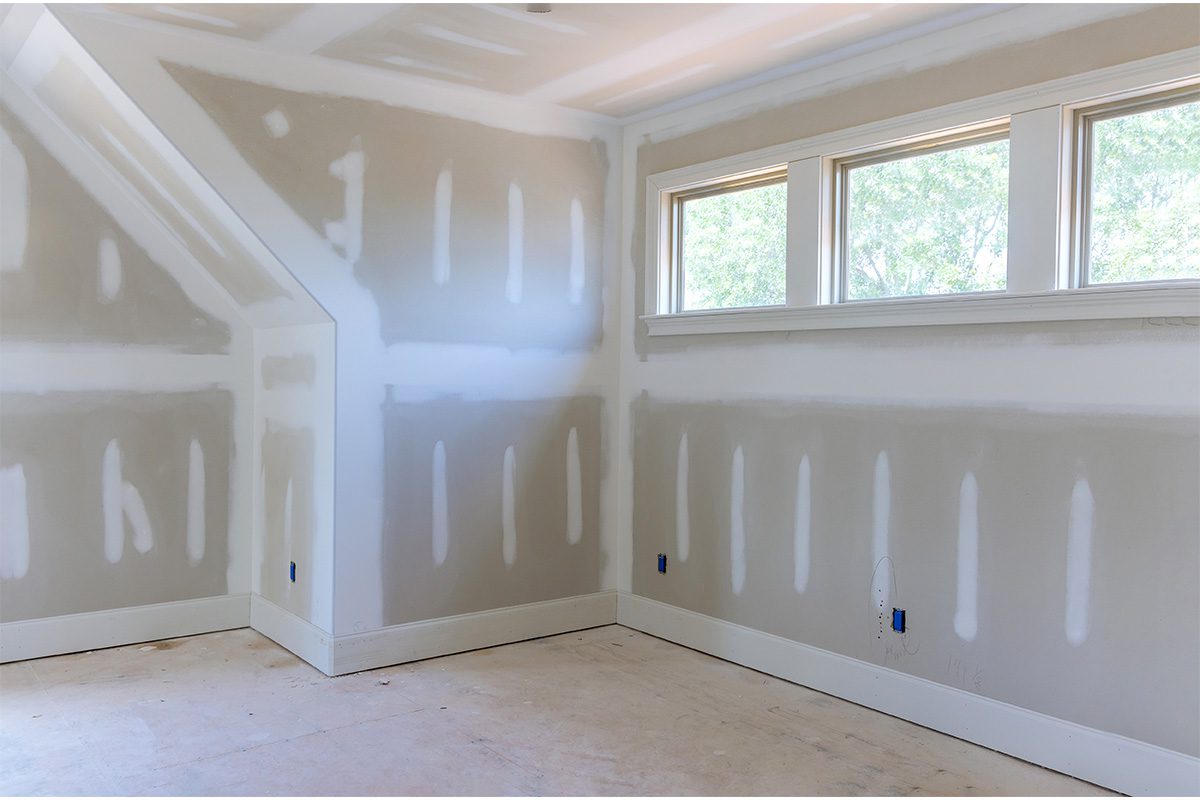
Electrical work is often hidden behind drywall, insulation, ceilings, slabs, trenches, or equipment covers.
Once it is covered, it becomes much harder to prove what was completed.
That matters when someone needs to know:
“Yes, the conduit was there.”
“Yes, the rough-in was complete.”
“Yes, that wall had wiring, boxes, or blocking before cover-up.”
“Yes, the underground work was installed before the pour.”
The problem is that the most important electrical documentation is often needed after the work is no longer visible.
That is why pre-coverup documentation matters so much for electricians. Rough-in wiring, conduit runs, junction box locations, service equipment, panel work, grounding, bonding, and underground electrical should be documented before they disappear behind the next trade’s work.
A few clear photos tied to the right project, location, and work stage can save a lot of confusion later.
2. Photos Are Scattered Everywhere

Most electrical contractors are not short on photos.
They are short on organized photos.
Photos may be stored in:
- Text messages
- Personal phones
- Shared albums
- Apps
- Google Drive
- Email threads
- Random folders
- Jobsite group chats
Then someone asks:
“Where is the photo of that panel?”
“Do we have pictures of the conduit before concrete?”
“Was the rough-in complete in that unit?”
“Who has the photo of that wall before drywall?”
And suddenly the team is digging through phones, texts, apps, and folders trying to find one image.
That is frustrating for the field team and the office.
The photo exists, but nobody knows where it is.
Good documentation should not make someone hunt through five different places to find proof of work. Photos should be organized by project, area, plan, room, stage, and issue so the right image can be found when it matters.
3. Field Updates Take Too Much Time
Electricians are trying to get work done.
They do not want to stop in the middle of the day to write long reports, fill out complicated forms, or update software that feels like it was built for the office instead of the field.
So updates get skipped, delayed, or reduced to something vague like:
“Rough-in done on 2nd floor.”
But that does not answer the questions the office actually needs answered.
Which rooms?
Which units?
Which panels?
What changed?
What is blocked?
What is ready for inspection?
What still needs to be completed?
This is where voice-to-field-note documentation becomes valuable.
Instead of forcing a field electrician to type a long report, the update can start with a quick voice note, a few photos, and the right location. The important details can be captured quickly while the work is still fresh.
The goal is not to create more paperwork.
The goal is to make the field update faster, clearer, and easier to use.
4. The Boss or PM Still Calls for Status

One of the biggest signs that a documentation tool is not working is when the field team updates it, but the boss still calls anyway.
That means the software did not reduce communication friction.
The field person may have already documented the work, but the office still cannot quickly understand what was done, where it happened, or whether it is complete.
So the boss calls.
Then the electrician has to stop again and explain the same thing.
This creates frustration on both sides.
The field feels like, “I already updated this.”
The office feels like, “I still do not know what is going on.”
The right documentation system should reduce those calls by making updates easy to understand at a glance.
A good field update should answer the follow-up call before it happens.
5. Coordination Problems With Other Trades
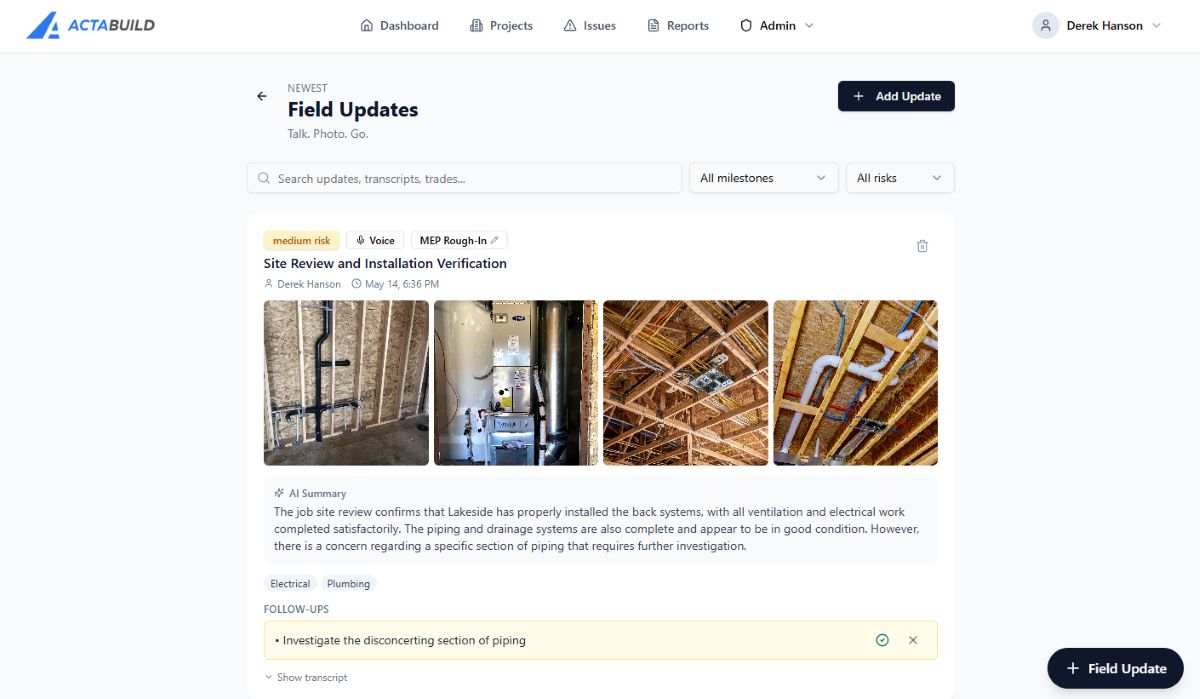
Electrical contractors are constantly affected by other trades.
Framers may move walls.
HVAC may conflict with conduit.
Plumbing may be in the way.
Drywall may start before rough-in is fully ready.
Cabinets may affect outlet, switch, or fixture locations.
Concrete may be scheduled before underground electrical has been verified.
These conflicts are common, but they become bigger problems when they are not documented clearly.
A photo by itself can help, but a photo with a location, note, issue status, and work stage is much more useful.
For example:
“Conduit conflict with HVAC duct in Unit 204, kitchen wall.”
“Drywall started before low-voltage was completed in conference room.”
“Owner requested outlet relocation on west wall before trim-out.”
That type of documentation helps prevent arguments later because the issue was captured when it happened.
6. Inspection Readiness

Electrical work has to be ready for inspection at key points in the project.
That means the team needs to know what is complete, what failed, what changed, and what needs correction.
Useful inspection-related documentation may include:
- Panel labeling
- Circuit IDs
- Rough-in photos
- Junction box locations
- Grounding and bonding
- Conduit runs
- Fire caulking
- Service equipment
- Underground before cover
- Corrections after inspection
When inspection documentation is organized, it helps both the field and the office stay aligned.
It also creates a clearer record of what was ready, what was reviewed, and what still needed attention.
7. Change Orders and Owner Requests
Electrical changes happen constantly.
A client may ask to add an outlet.
A switch may need to move.
An EV charger may be added.
Lighting locations may change.
Low-voltage, data, security, or dedicated circuits may be requested after the original plan.
The problem is not always the change itself.
The problem is proving when the change was requested, who approved it, what was completed, and whether it affected time or cost.
Without good documentation, these details can turn into disputes.
A simple app containing field updates with photos, notes, and location context can create a much clearer record.
Instead of relying on memory, the team has a documented trail of what changed and why.
8. A Photo Without Location Is Often Not Enough
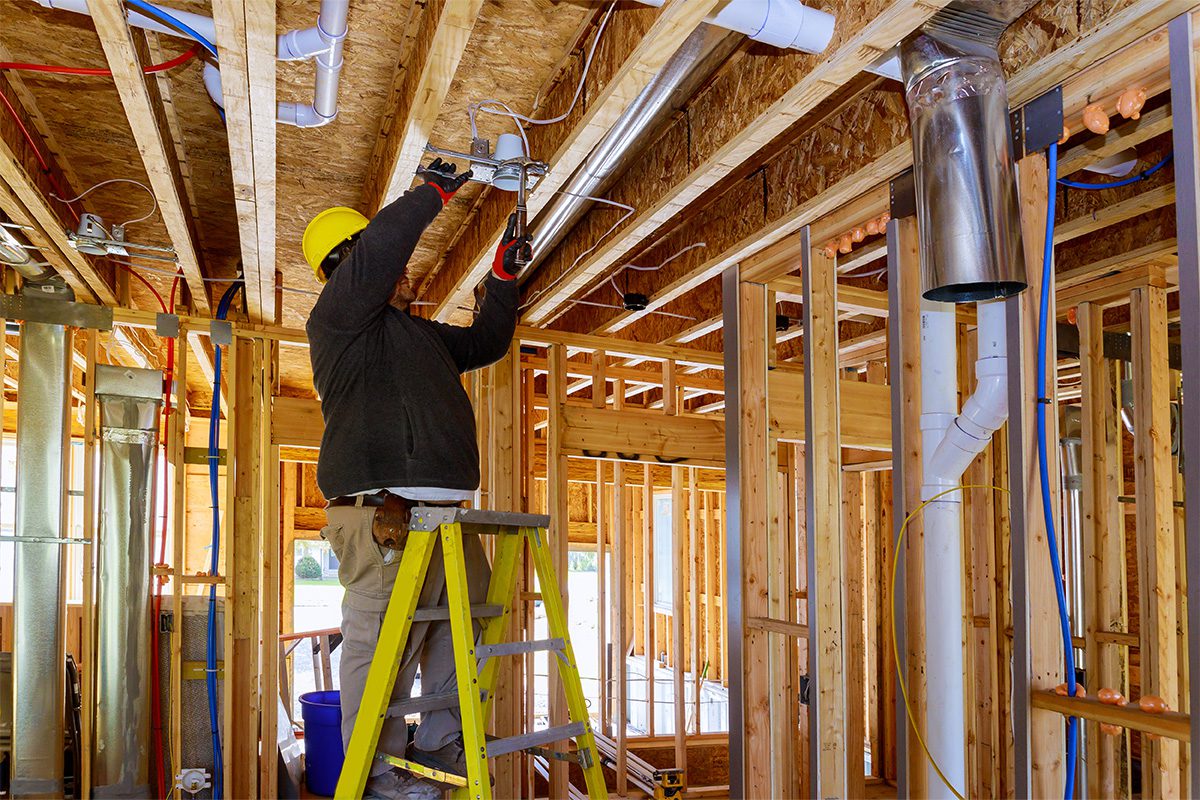
A photo is helpful, but only if people know what they are looking at.
Electrical contractors often need location-specific documentation.
Which building?
Which floor?
Which unit?
Which room?
Which wall?
Which panel?
Which circuit?
Which work stage?
Without that context, a photo can become almost useless.
A close-up image of conduit, wiring, boxes, or panel work may make sense to the person who took it, but not to someone reviewing it weeks or months later.
That is why electrical documentation should connect photos to areas, plans, rooms, stages, and notes.
The more clearly the image is connected to the actual location, the easier it is to understand and use later.
Electrical Documentation Should Make the Job Easier
Electrical contractors do not need another complicated tool that creates more work.
They need a simpler way to capture what happened, where it happened, and what still needs attention.
The goal is not just to take more photos.
The goal is to make jobsite documentation easier to capture, easier to organize, and easier to understand.
ACTABUILD helps electrical contractors document field updates, photos, issues, work stages, and locations in one place so the team can spend less time searching, explaining, and re-documenting the same work.
Because when documentation is clear, the office understands what happened.
The field gets fewer follow-up calls.
And important electrical work does not disappear without a record.
Document Electrical Work Before It Gets Covered
pElectrical work is too important to leave scattered across phones, texts, and folders.
Whether you are documenting rough-in, underground conduit, panel work, inspection corrections, service changes, or owner-requested updates, ACTABUILD helps keep the record organized by project, area, stage, and photo.
Capture the update once.
Make it easy to find later.
And answer the follow-up call before it happens.
START DOCUMENTING TODAY
ACTABUILD helps builders document construction progress with organized photos, milestone updates, site plans, field notes, and project reports. Instead of photos getting buried in text messages, folders, or random jobsite updates, ACTABUILD gives builders a simple way to keep visual records connected to the right project, stage, and location.
Ready to document your next project with more clarity?
Related Posts

When a Superintendent Leaves, Does the Project Knowledge Leave Too?
Superintendent turnover can create a costly knowledge gap. Learn how organized photos, field notes, milestones, and issue tracking preserve the project’s history so the next person can step in with confidence.
How Construction Photo Documentation Supports Green Home Certification
Many of the features that make a home healthier, more efficient, and more durable are only visible during construction. Air sealing disappears behind drywall. Flashing gets covered by siding. Insulation fills wall cavities. Ventilation systems become part of the...

When a Jobsite Starts to Drift
See how construction progress documentation helps home builder owners spot jobsite drift, review milestones remotely, and address issues before they grow.